
Travis Kalanick’s launch of Atoms is another sign that serious attention is shifting towards digitising the physical world.
Much of the discussion around AI bottlenecks has focused, rightly, on compute and energy. But another constraint which isn’t receiving similar attention is access to high-quality operational data from the physical world.
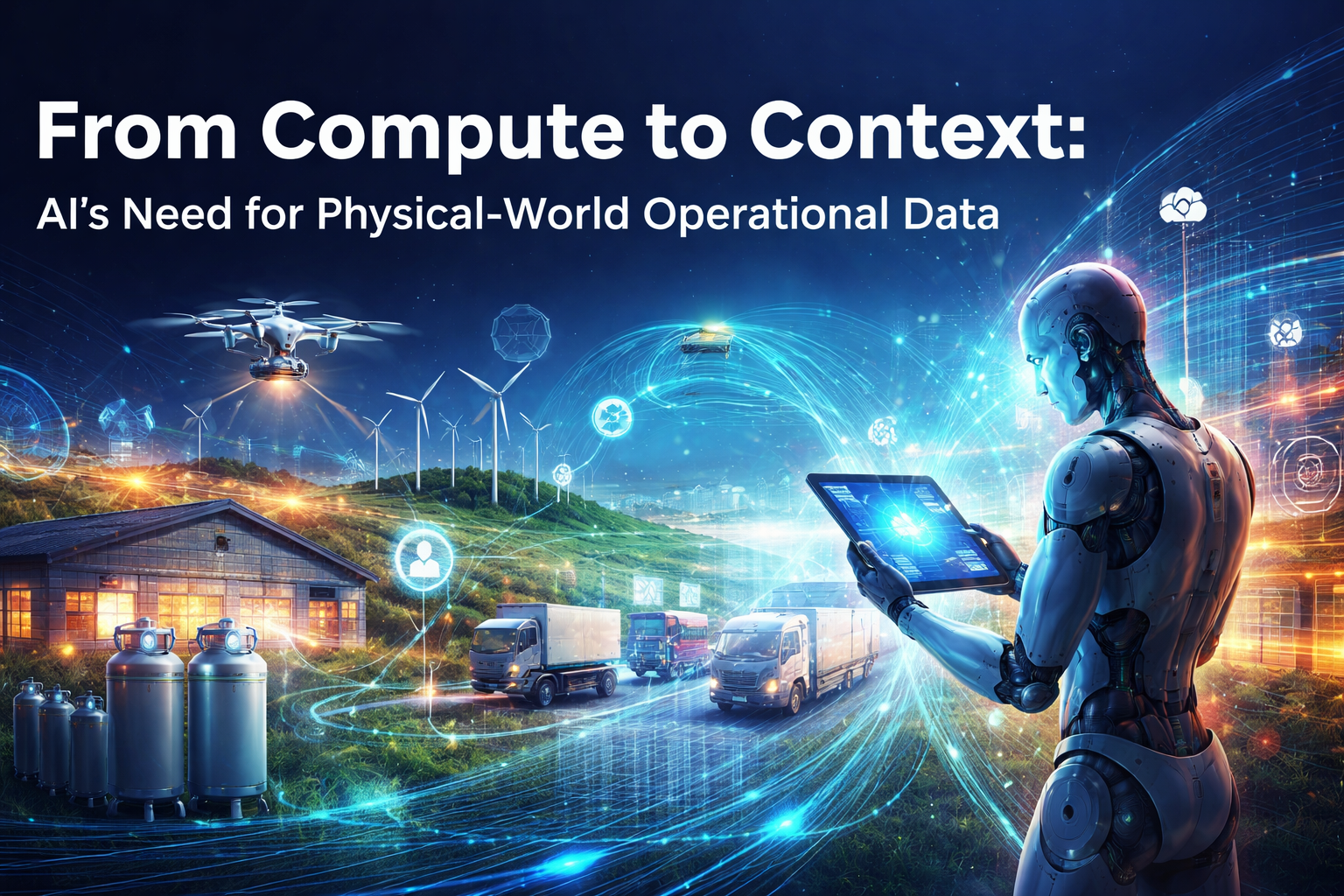
If AI is to meaningfully improve lives, it will need better data from assets operating in real-world environments across critical sectors including energy, healthcare, agriculture, manufacturing and logistics.
That is difficult to build. It requires sensors, hardware, field deployment, messy operating conditions and long feedback loops.
But it is also where defensibility can become far more durable.
As software-only moats continue to weaken, companies that build trusted data and intelligence layers around physical operations may become increasingly important.
That is part of what we are building at Gasuna, starting with distributed cylinder-based assets. These cylinder assets are embedded in both daily life and critical operations across homes, healthcare settings, restaurants, warehouses, farms and industrial sites, where continuity of supply, servicing, safety and operational visibility are all essential.
Better data at that layer can power refill automation, payments, servicing, logistics coordination and safety monitoring, while laying the foundation for a broader intelligence layer across physical asset networks.
Beyond Compute and Energy: The Importance of Physical-World Data for AI
Previous
Previous
The Operational Challenge of Decentralised Infrastructure and How Gasuna Is Solving It
Next
Next